Tibetan Emotional Upheaval and After
September 11, 2008
Bhuchung K. Tsering
Tibetan World, June-July 2008
The demonstrations in different parts of Tibet that began on March 10,
2008 have resulted in the Tibetan people, both inside Tibet and
outside, going through a strong emotional upheaval. Some effects of
this are perceived by the outside world. While the indomitable courage
of the Tibetans in Tibet have been a source of inspiration to all
Tibetans, the ill-conceived approach of the Chinese authorities at
various levels in dealing with this have left a psychological scar in
the hearts of the Tibetan people.
Having had the opportunity to speak to quite a few Tibetans and non-
Tibetans who were in Tibet during the crisis, the following is an
analysis of the situation. The common feeling is that China, which
takes every opportunity to proudly proclaim itself as a multi-ethnic
nation, failed to act as one in dealing with the developments in
Tibet. Rather, the government agencies, particularly the propaganda
machinery, acted as if they represented just one community. A
significant impact of this has been a never-before racial tension
between Chinese and Tibetans, and the feeling among Tibetans that they
are not being regarded as part of the "multi-ethnic family." In
particular, it seems several Tibetan Party members could not believe
that the Chinese Government would adopt such a negative strategy
(fueling of nationalistic feelings) not only because they knew the
negative consequences, but also because it did not commensurate with
the reality on the ground. Today, Tibetans who were always suspicious
of Chinese policies have had their fears confirmed while those Chinese
who did not have any particular feelings about Tibetans have been
injected with a feeling of mistrust against them. A result of the
official propaganda is that the Tibetan people are seen (by the
Chinese people) as an ungrateful lot who are against the Chinese
people. On the Tibetan side, among ordinary Tibetans distrust in
Beijing has increased exponentially in the light of its short-sighted
approach. This is not good for China's own long-term interest.
However, if past experience is any guide, the leaders in Beijing would
not be looking at the situation from this perspective. As it is they
seem to believe that the situation is under control and that the dust
will go away if it is swept under the carpet or if it is blamed on a
"foreign hand" like the "Dalai Clique." Other than dealing with the
demonstrators harshly they do not seem to be in a mood to really
understand the underlying causes and to see if there was any
shortcoming on the part of the authorities. The reality is that China
does not have a full picture of how and why the demonstrations took
place in Tibet and it appears that it is not in a hurry to know. Even
on the violent clash that took place on March 14 what is out there is
not the full story for rumors are said to be ripe in Lhasa that it was
encouraged, if not started, by Chinese Government agents. Whatever be
the case, although the authorities in Tibet will leave no stone
unturned to project an image of normalcy in the Tibetan society today,
the truth is that it will take a great deal of time and effort before
Beijing can hope to gain the trust of the Tibetan people. The sooner
this reality is faced by Beijing the better it will be for both the
Tibetan and Chinese communities.
The above is my dispassionate look at the situation. What does this
mean to the Tibetans in diaspora, particularly to the post-Shichak
period? I am referring to those Tibetans who may have begun their
urbanisation process after having moved out of the Shichaks (where
their parents may still be) following their education. This generation
of Tibetans has a different set of priorities and feels that it has a
different worldview, much different from that of ours or the
generation before us.
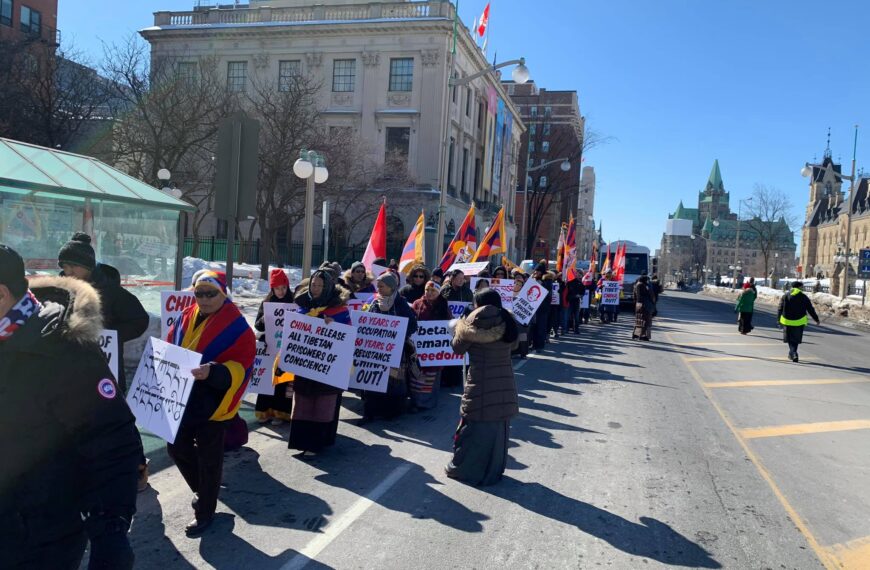
The confluence of modern technology and Tibetan activism brought the
demonstrations in Tibet up close and personal to the average Tibetan
in exile than any other events had done to date. Tibetans everywhere
experienced an emotional upheaval that resulted in the spontaneous
activities like rallies, vigils, and prayer sessions. Tibetan emotion
also suffered a rollercoaster experience; feeling high in admiration
of the courage and determination of our people and feeling low at how
the Chinese Government reacted to it. Those Tibetans residing in North
America and Europe especially could see how Beijing (according to one
source, the China Scholarship Council under the Chinese Ministry of
Education was behind this) turned the Chinese students residing in
these regions against Tibetans in very obvious ways. Many of these
Chinese students who may not have had the courage, nor the freedom, to
raise a voice within China had no qualms in participating in
demonstrations in Europe and America, the core message of which was
anti-Tibetan and anti-Dalai Lama.
The political issue of Tibet was, thus, made very personal to both the
Chinese and the Tibetans. At a time when the Tibetans were being
constantly taught to differentiate between policies of the Chinese
Government and views of ordinary Chinese people, such actions on the
part of the Chinese people did not help in the "unity of the family."
The impact of the psychological scar that I mentioned earlier was
evident subsequently when the tragic earthquake took place in Sichuan.
A natural calamity about which there should not have been a second
thought in terms of solidarity became an internal debate in sections
of the Tibetan community on how they should approach it. Questions
were asked on why the Tibetans in exile should stop the ongoing
demonstrations in front of Chinese embassies or even pray for the
deaths of Chinese when there was a lack of acknowledgement of the
deaths of the Tibetans as a result of Chinese onslaught on Tibetan
demonstrators, leave alone any attempt to address Tibetan concerns. It
was evident that there were people feeling discomfort, to say the
least, at the events that were organized in the Tibetan community to
remember the earthquake victims and to assist in their rehabilitation.
Coincidently, during a recent public discussion, a Chinese American
who has been involved with Tibetans for quite many years and should
know us better than the average Chinese complained about the lack of
positive Tibetan gestures in the wake of the earthquake. He was
unaware of the significance of the gestures that have already been
made by the Tibetan community.
Any way, going back to the demonstrations in Tibet, I do not think we
should draw any simplistic conclusions based on the agenda of our
respective interest groups, be it Tibetan or non-Tibetan. What is
clear is that our brethren inside Tibet have spoken out loudly and at
great risk about their dissatisfaction with the present situation. In
doing so they have added a new dimension to the Tibetan struggle,
something that seems natural to any Tibetan but should be an issue to
be thought over by non-Tibetans, particularly the Chinese. This is the
fact that the post-1959 generation of Tibetans who have not seen the
"old society" and whose parents had been "liberated" from its shackles
have established themselves as the leaders of the struggle inside
Tibet. While not being organized in the way the Tibet movement in
exile is, the Tibetans, whether in Lhasa, Labrang or Lithang, have in
their own ways conveyed clearly the commonality in their aspirations.
This is the message to us the Tibetans and this is a message to the
leaders of China.